Family & Wedding
Party Photos
How to build the list, keep groupings manageable, and get everyone in and out without losing half of cocktail hour.
Family formals are the part of the day couples most frequently underestimate — and the part that, when it runs long, takes time from everything that comes after. Not because anyone did anything wrong. Because the pieces that make it complicated are mostly invisible until they're happening in real time.
This guide covers how to build a list that's actually manageable, why the math on groupings surprises almost everyone, and what makes the difference between formals that run 25 minutes and formals that run an hour.
Why Formals Take Longer Than Planned
The timeline says 30 minutes for family formals. The formals take 55. Nobody was slow, nobody was difficult, nothing went obviously wrong — and yet somehow nearly an hour passed.
This happens at almost every wedding. The reasons are rarely dramatic. Someone stepped away to get a drink right before their grouping was called. Someone's dress needed adjusting between shots. Someone got pulled into a conversation on the far side of the lawn and didn't hear their name. The flower girl had opinions about standing still. Two people on the list showed up to the ceremony separately and nobody confirmed where the other one was.
Each moment is small. None of them feel like a problem in the instant they're happening. But they stack, and they stack during the one window of the day that's already under the most time pressure.
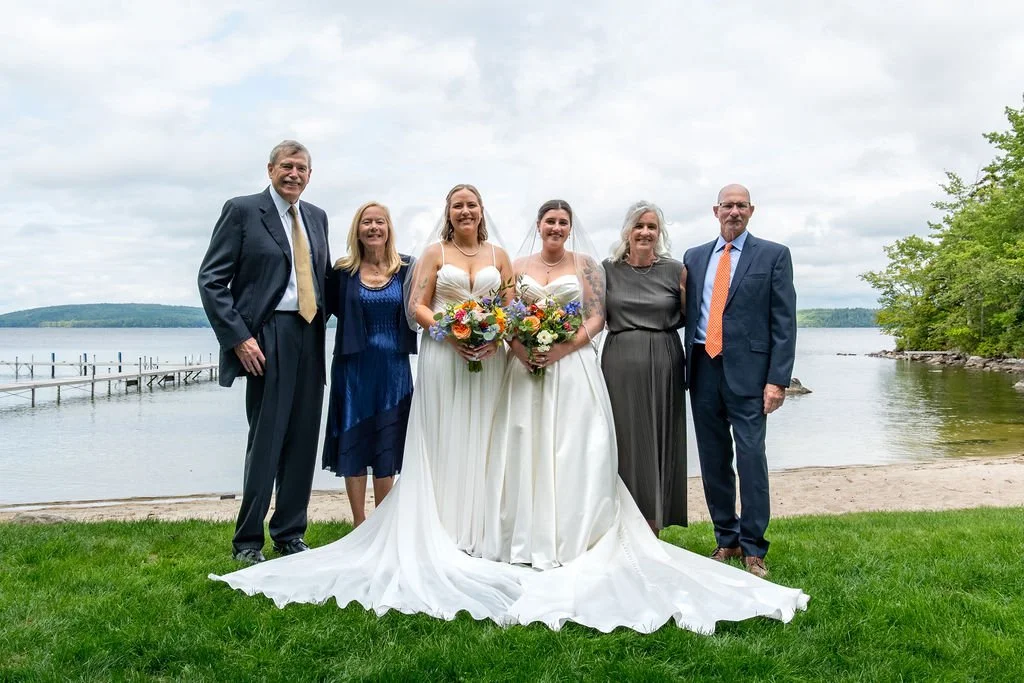
The difference between formals that run 25 minutes and formals that run an hour usually isn't the size of the list — it's whether the people on it know where to be and when. A brief heads-up before the ceremony goes a long way: "Right after the recessional, we're doing family photos by the barn. If you're on the list, head straight there."
Build the List Before the Day
The single most effective thing a couple can do to speed up family formals is hand the photographer a written list before the wedding day. Not a general idea of who should be there — an actual numbered list of groupings, in the order they should happen.
Without a list, the photographer has to prompt groupings in real time while simultaneously keeping track of who's been done, who's next, and who's wandered off. With a list, that cognitive load disappears and the whole thing moves like a conveyor belt. People get in, get the shot, get dismissed, and get back to cocktail hour.
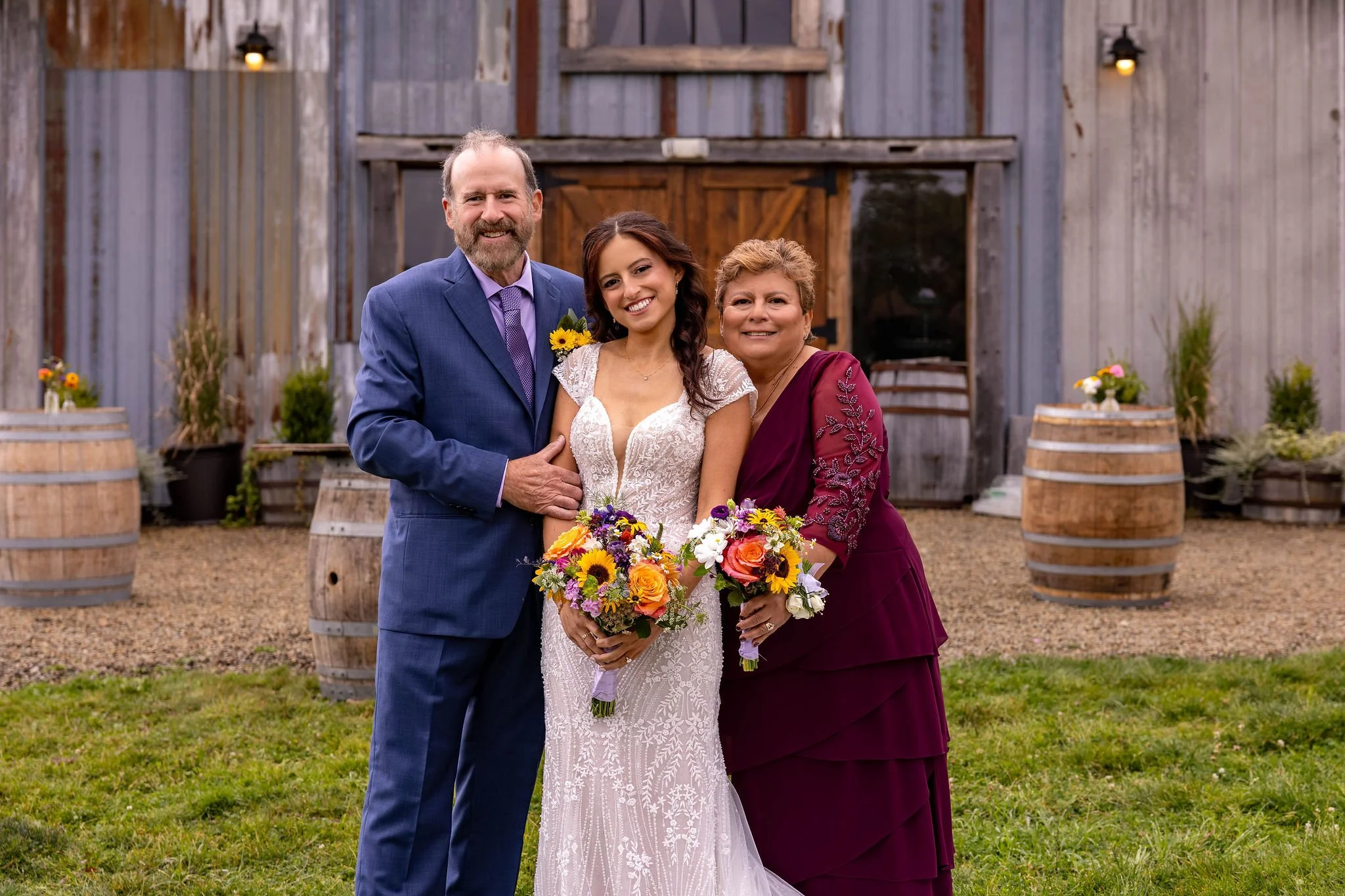
Specific groupings, not categories. Instead of "bride's family," write out: bride + both parents, bride + mom, bride + dad, bride + siblings, bride + maternal grandparents. Each line is one composition set. When you see it written that way, you start to understand how many shots "bride's family" actually means — and you can make intentional choices about which ones genuinely matter to you versus which ones felt like obligations.
For each person on the list, include their role and their name. Not just "father of the bride" and not just "Scott" — both. "Father of the bride — Scott." During formals I can call out Scott by name to get his attention quickly, and the role tells me exactly where he belongs in the frame without having to ask. When you're moving through twelve groupings and a crowd of people, being able to say a specific name and know immediately who that person is relative to the couple saves real time on every shot.
It also helps when families are large or blended and the relationships aren't immediately obvious to someone who hasn't met everyone before. "Bride's maternal grandmother — Barbara" tells me everything I need before I've said a word.
If there are family members who cannot be in the same photograph — divorced parents, an estrangement, a difficult dynamic — put it on the list. This isn't awkward to share; it's genuinely useful information. Without it, I might naturally group people together the way a family portrait session would, and the correction mid-shoot is uncomfortable for everyone involved. With it, the groupings are sequenced from the start to avoid the situation entirely and nobody has to say anything in the moment.
A simple note is enough: "Dad (Tom) and stepmom (Linda) — separate from mom (Karen), do not combine." I'll handle the rest without making it a thing.
Grandparents should be near the top of the list on both sides, not worked in wherever they happen to fall. By the time grandkids are getting married, grandparents are often the oldest people in the room — and standing around waiting through a long formals sequence isn't comfortable. Get them in early, get a great photograph, and get them somewhere they can sit down.
If a grandparent uses a walker, a wheelchair, or has any difficulty getting around, note it on the list. That one detail changes the logistics significantly. Can they reach the formals location, or is the ground too uneven? Would it make more sense to photograph them at the ceremony site immediately after the recessional, before they've moved anywhere? Is the reception space on flatter ground where positioning is easier? These aren't things to figure out in the moment — they're things to think through in advance so the answer is already decided when it matters.
Sometimes the right call is a quick grouping at the ceremony while everyone's still assembled — before the crowd disperses and before there's any walking involved. Sometimes the reception works better. The point is knowing ahead of time, not discovering the complication after formals have already started somewhere else.
Structure the list in two clear blocks — bride's family, then groom's family (or partner A's family, then partner B's). Within each block, work from largest to smallest: full extended groupings first, then immediate family, then smaller combinations. This keeps each side's people together in one continuous window rather than calling the same people back multiple times as you move between sides.
The practical benefit: once bride's side is finished, that entire group can be dismissed to cocktail hour — unless they're in the wedding party. They don't need to stand around waiting while groom's family works through their groupings. They're done, they know it, and they can go enjoy themselves. Same applies in reverse. Managing it by side is what makes that clean dismissal possible.
One person on each side who knows the list, knows the faces, and has the social permission to move people efficiently. This isn't the photographer's job — I don't know your Uncle Dave or which cousin tends to disappear. Your wrangler does. Give them the list the week before and ask them to keep people loosely corralled after the ceremony. It costs them ten minutes of attention and saves everyone thirty.
Keep the must-have list tight. There's always time at the reception for the extras — a quick photo with the college friends, the whole table together, a spontaneous grouping that made sense in the moment. Those happen naturally and nobody's watching the clock. The formals window is for the non-negotiables.
Largest to Smallest — The Order Matters
The order you work through the list has a real impact on how long it takes. Start with the biggest groupings — extended family, any guests who are only needed for one or two photos. Get them in the frame and get them dismissed. Once they're done, they're free to enjoy cocktail hour instead of standing around waiting to see if they're needed again.
From there, move inward: immediate family, then the wedding party, then the couple. The circle tightens as you go. By the end you're working with a small, patient group who knew they'd be there until the finish. The people who needed to be somewhere else are already there.
The Combination Problem
Here's where formals lists almost always expand beyond what couples originally had in mind. The original list is reasonable. Then the day arrives and the additions come naturally — from good intentions, from family dynamics, from someone standing nearby who reasonably assumes they'll be included.
The math on individual shots surprises almost everyone. A one-on-one with a single bridesmaid isn't one frame — it's a composition set. A few poses per pairing is what gives you actual variety in the gallery: both looking at the camera, looking at each other, a candid laugh, a hug. Three to five poses done efficiently, and you walk away with images that feel like the relationship rather than one stiff snapshot. That's maybe a minute or two per person when things move well. Multiply by eight bridesmaids and you're looking at 10–16 minutes that wasn't anywhere on the original timeline — before a single family member has been photographed.
Add "two of them are sisters, so they need one together." Then "all three sisters." Each ask is completely reasonable. Each one is additive. The list that seemed tight on paper assembles itself into something much longer once the day is actually running.
The issue isn't that any single extra shot is unreasonable — it's that the extras keep coming, each one small, and each one moves the clock forward. The couple who planned 30 minutes for formals didn't plan for the nine additions that arrived on the day. Individually none of them felt like a decision. Collectively they're half an hour.
The list you write before the wedding is the one that protects cocktail hour. Keep the additions for the reception, where there's no schedule to protect and the photos happen naturally between conversations.
If someone suggests an extra grouping during formals, the answer doesn't have to be no — it can be "let's grab that one at the reception." It gets said with a smile, it preserves the relationship, and it keeps the window on track. Nobody leaves unhappy. The extra shot usually happens anyway, just in a better setting.
The Human Variable
The list is one thing. The people on it are another. You can have a perfect shot list, a designated wrangler, and a clear location — and still spend four minutes tracking down one person who stepped away right before their grouping was called. That's not a failure of planning. It's just people being people, at a wedding, where there are drinks and old friends and a lot going on.
Someone steps away for a drink right before it's their turn. Someone's adjusting a boutonniere. Someone got caught up in a conversation they couldn't easily leave. Someone heard their name but wasn't sure it was meant for them. None of it is anyone's fault. Each moment is small. But these moments come in sequence, and they come while the cocktail hour clock is running.
What makes the difference is experience — knowing before it happens who's likely to drift, how to redirect without making it awkward, how to keep the energy up when the group is starting to lose focus, when to call a name loudly and when to go get someone quietly. The formals that look effortless from the outside aren't effortless. They look that way because the friction was handled before anyone noticed it.
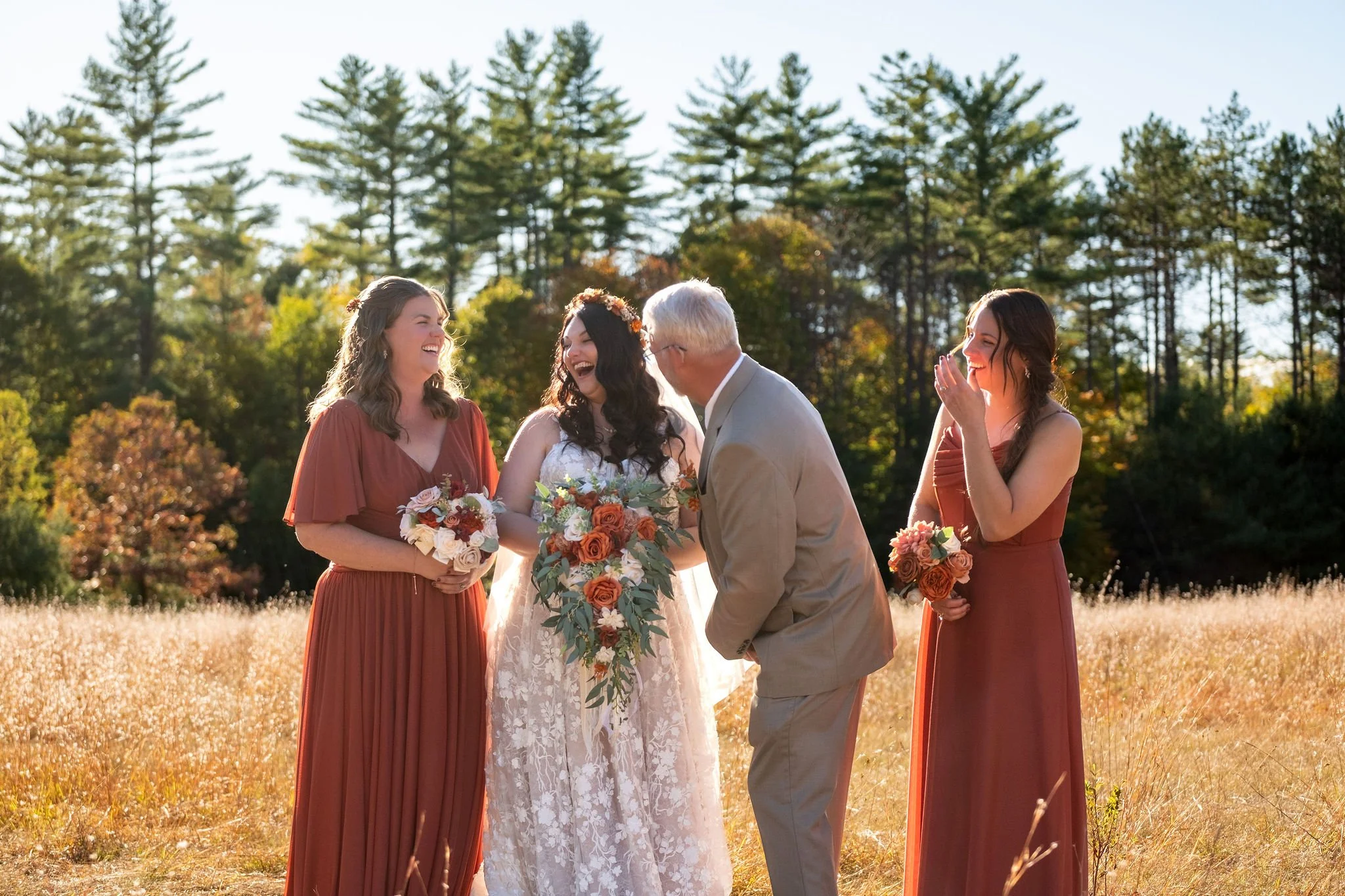
The photos that don't exist in the gallery aren't always the ones that weren't taken — sometimes they're the ones that never needed to be taken because nothing went wrong. Ten years of weddings is mostly just knowing which problems are coming before the couple has any idea they're arriving.
A Note on Kids
Kids are wonderful and completely unpredictable and you should plan around them rather than assuming they'll cooperate. A four-year-old who was perfectly charming during the ceremony may have strong feelings about standing still twelve minutes later. That's not a problem — it's a four-year-old.
Photograph any grouping that includes young children early in the formals window, while they still have patience. Once they're done, they're free — to run around, find snacks, do whatever it is they'd prefer to be doing. Trying to hold a four-year-old in position while you work through six other groupings and come back to them last is a recipe for tears. Theirs, possibly yours.
The best photos of kids at weddings almost never come from formals. They come from the moments in between — a flower girl inspecting her petals, a ring bearer who found a stick more interesting than the ceremony, two small cousins chasing each other across the lawn. Let the formal be quick and expect the candid to be where the real images are.
Day-Of Logistics
A few practical things that affect how smoothly formals run, regardless of list quality or group size.
Pick the formals location before the day and make sure everyone knows it. If the spot requires a short walk from the ceremony, build that into the timeline. Moving 30 people from point A to point B eats time even when everything goes smoothly. A location that's immediately adjacent to the ceremony exit is almost always faster than the more scenic option that requires a five-minute walk.
A two-minute announcement before the processional is worth more than any amount of coordination after. Something simple: who's on the list, where to go after the recessional, and who the wrangler is. People who know what's expected of them right after the ceremony are dramatically easier to assemble than people who are surprised by it.
Send the shot list at least a week out — not day-of. It gives me time to understand the family structure, flag anything that might affect timing, and prepare for dynamics I should know about. Divorced parents who need to be in different groupings, family members with mobility considerations, anyone who will need a little extra patience — knowing this in advance means it's already accounted for rather than handled on the fly.
The couples who enjoy their formals most are the ones who go in knowing exactly what's on the list, have a wrangler they trust, and have made peace with the fact that some things will be slightly imperfect and that's completely fine. The goal is a set of photographs you love, not a military operation. Give it enough structure to run efficiently, then let it breathe.
More guides as they're ready.
No regular newsletter. When new planning guides go up or sessions open, I'll let you know. That's it.